BMW Brake Vibration & Shaking Repair: Rotors in Hollywood, FL
BMW brake vibration, whether it shows up as a shaking steering wheel, a pulsing brake pedal, or vibration through the seat, deserves attention. In Hollywood, FL, heat, stop-and-go traffic, and normal wear can affect brake rotors, pads, calipers, and suspension components. The pattern of the vibration helps narrow down where the problem starts.
A shake during braking is often linked to uneven rotor surfaces or deposits, but it can also point to worn suspension parts, wheel concerns, or sticking calipers. Understanding when and where you feel the vibration is the first step toward an accurate brake inspection and repair.


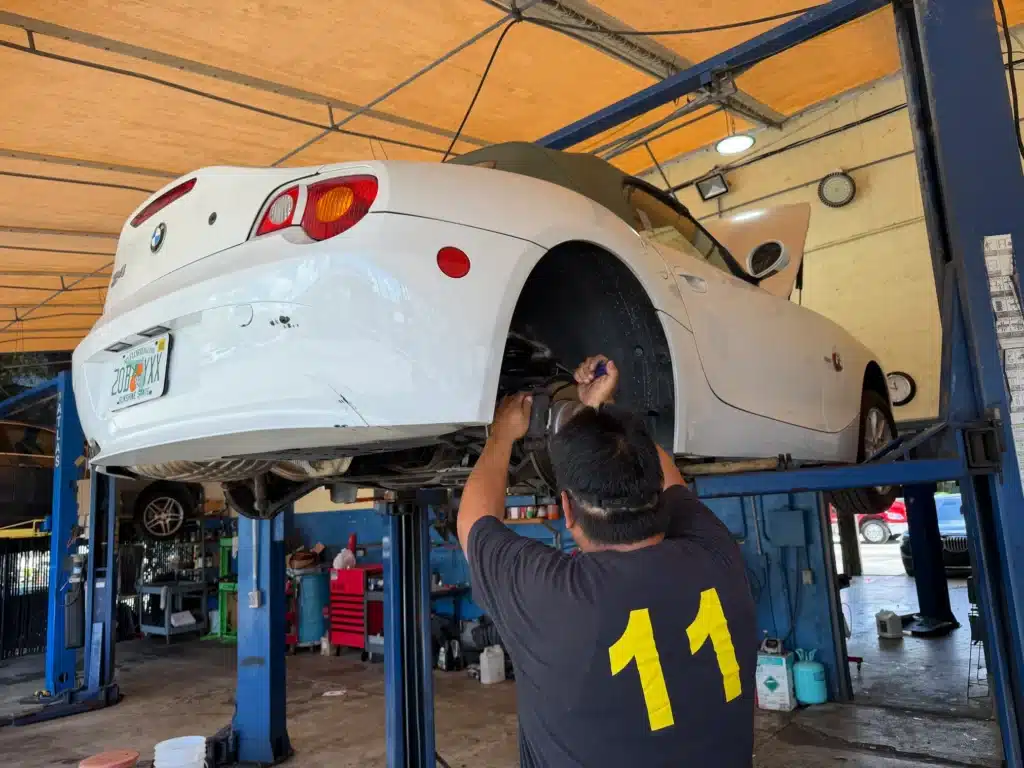
- Brake pedal pulsation often indicates rotor thickness variation or uneven pad deposits, not necessarily “warped” rotors.
- Steering-wheel shake usually involves front brakes, but worn suspension, hubs, tires, or steering components can amplify it.
- Rust, debris, or incorrect wheel-bolt torque can cause rotor runout and recurring vibration after replacement.
- Heat, dragging calipers, seized slides, and uneven pad wear can quickly recreate brake shudder.
- Do not ignore pulling, grinding, burning smells, warning lights, soft pedals, or severe shaking; seek immediate service.
- Accurate repair requires measuring rotor runout, checking calipers and hubs, and inspecting related suspension components.
BMW Brake Vibration: What You Feel and Why It Happens
BMW brake vibration can range from a light pulse through the pedal to a pronounced steering wheel shake when braking from highway speed. The way the vibration presents matters. A pulsation felt mainly in the brake pedal often points toward the front brake discs, while a shake in the steering wheel can involve the front rotors, wheel mounting surfaces, suspension joints, or steering components. Vibration felt more through the seat or floor may indicate a rear-brake concern. Some drivers notice it only during firm stops; others feel it during nearly every application of the brake.
Despite the common description of “warped rotors,” the underlying issue is frequently uneven brake-disc thickness or uneven friction material transfer from the pads. When a disc does not present a consistent surface to the pad, braking force rises and falls as the wheel turns. That variation travels through the caliper, suspension, steering wheel, and pedal. Heat is often a contributing factor. Repeated hard braking, stop-and-go driving, a sticking caliper, or holding the car stopped with hot pads clamped against the discs can create conditions that lead to vibration.
BMW vehicles also rely on precisely fitted brake and chassis parts. Rust, corrosion, or debris between a rotor and its hub can prevent the disc from sitting perfectly flat. Improper wheel-bolt torque can contribute as well. A worn thrust-arm bushing, ball joint, tie rod, or wheel bearing may not create the original brake variation, but it can make a minor issue feel much more severe at the steering wheel. For that reason, replacing pads and rotors without inspecting the surrounding components may not resolve the complaint.
- Pedal pulsation may point toward brake-disc thickness variation.
- Steering wheel shake can involve front rotors, hub surfaces, or suspension components.
- Seat or floor vibration may indicate a rear-brake concern.
- Pulling, excess heat, or a burning smell can suggest a dragging caliper.
Other symptoms help narrow the diagnosis. A car that pulls left or right while braking may have a caliper that is dragging or applying unevenly. A burning smell, excess wheel heat, or rapid pad wear deserves prompt attention. A scraping sound can indicate pads worn through their friction material, while a single clunk as braking begins may come from loose hardware or worn suspension parts. If the steering wheel shakes even when the brake is not applied, tire balance, wheel damage, or suspension wear may be involved instead of the brake system.
At German Car Depot in Hollywood, FL, technicians evaluate the symptom rather than assuming every vibration needs the same repair. The inspection can include brake-disc runout and thickness measurements, pad and caliper checks, hub-surface condition, wheel-bolt torque, and a review of front and rear suspension components. BMW ISTA diagnostics may also be used when warning lights, electronic parking-brake faults, or brake-system messages are present. Identifying the source before service helps ensure the repair addresses the actual cause of the vibration, not merely the most visible part.
Brake Vibration Diagnostic Checklist
- Note where vibration is felt: pedal, steering wheel, seat, or floor.
- Record when it occurs, including braking speed, brake pressure, and whether it happens every stop.
- Inspect disc thickness variation, runout, pad condition, and signs of uneven friction transfer.
- Check calipers for dragging, excess heat, uneven pad wear, pulling, or burning smells.
- Clean and inspect hub mounting surfaces for rust or debris behind the brake disc.
- Verify wheel-bolt torque and examine wheels for damage or tire-balance concerns.
- Inspect thrust-arm bushings, ball joints, tie rods, and wheel bearings for wear.
What Wheel Vibration, Steering Shake and Pedal Pulsation Can Mean
Wheel vibration during braking can point to more than one brake-system concern. A shake felt through the steering wheel often involves the front brakes, while a pulsing brake pedal may relate to brake rotors, brake pads, pad deposits, caliper operation, or contaminated mounting surfaces. On a BMW, brake vibration may be most noticeable during moderate or hard braking, at highway speed, or after the braking system has warmed up. Measuring rotor runout, thickness variation, and the rotor surface helps identify whether the concern is brake shudder from uneven rotors, a warped brake component, or what drivers commonly describe as warped discs.
- Steering-wheel shake often points to a concern at the front brakes or front suspension.
- Pedal pulsation can indicate rotor thickness variation, pad deposits, or caliper operation issues.
- Vibration that changes with speed may also involve the wheel, tire, or steering system.
Not every braking vibration originates with the brake parts. Unbalanced tires, worn suspension components, damaged shocks, loose steering hardware, and deteriorated bushings can make a car vibrate and can worsen the sensation under braking. Improper wheel alignment can create vibrations, while a worn thrust arm or thrust arm bushing may allow the front end to move under load. Frozen brake calipers can keep pads in contact with the rotors, creating heat and uneven deposits that affect pedal feel. A complete service should inspect the wheel, tire condition, front suspension, steering system, caliper movement, and mounting surfaces before recommending replacement parts for the specific model. This process separates a brake concern from other vehicle issues and helps confirm the source of wheel vibration.
Braking Vibration Inspection Checklist
- Note when vibration occurs: light braking, hard stops, highway speeds, or after the brakes warm up.
- Check whether the shake appears in the steering wheel, brake pedal, vehicle body, or all three.
- Measure rotor runout, thickness variation, and surface condition rather than assuming discs are warped.
- Inspect pads for uneven wear, glazing, contamination, and deposits that can create brake shudder.
- Verify calipers slide and release properly; frozen calipers can overheat rotors and leave uneven deposits.
- Inspect tires, wheel balance, suspension, steering hardware, thrust arms, and bushings for related movement.
- Clean and examine rotor and wheel mounting surfaces before replacing components for the specific BMW model.
Why BMW Brake Vibration Can Change With Speed or Heat
BMW brake vibration commonly changes with speed, brake temperature, and pedal pressure because the braking system is reacting to forces that vary as the wheels rotate. A driver may notice no issue on the first stop of the day, then feel a steering-wheel shake after repeated highway exits or stop-and-go traffic. That pattern is useful diagnostic information, but it does not automatically mean the brake rotors are warped.
In many cases, vibration comes from uneven friction material on the rotor surface or variation in rotor thickness. As the brake pads pass over those areas, clamp force can rise and fall slightly once per wheel rotation. The driver may feel that change as pedal pulsation, a brake shudder, or movement through the steering wheel. Heat can make the condition more noticeable because rotor expansion, pad friction, and caliper movement all change as the components warm up.
Heat-related symptoms also warrant a check for underlying causes. A sticking caliper slide, restricted brake hose, seized piston, improperly seated pad hardware, or excessive wheel-bearing play can create uneven loading and high temperatures. Rust or debris between a brake rotor and its hub can prevent the rotor from sitting flat, producing lateral runout even when replacement parts are new. Loose or worn control-arm bushings, ball joints, and other front suspension components can amplify a vibration that begins at the brakes.
The term “warped discs” is often used for any pulsation, but a measurement-based inspection gives a more useful answer. A technician can inspect pad wear and rotor surface condition, measure rotor thickness and runout, check hub mounting surfaces, and assess caliper movement. Road testing helps identify whether the vibration occurs only while braking, at a particular speed range, or even while coasting.
At German Car Depot in Hollywood, FL, BMW brake concerns are evaluated as a system rather than by replacing brake rotors alone. BMW ISTA diagnostics can help identify relevant electronic brake or chassis faults, while a hands-on inspection addresses the mechanical source of the shake. The appropriate repair may involve pads and rotors, caliper service, hub cleaning, or suspension repairs, depending on what the measurements and vehicle condition show.
BMW Brake Vibration Patterns and Possible Inspection Focus
| When the vibration occurs | What the driver may notice | Possible areas to inspect |
|---|---|---|
| After repeated highway exits or stop-and-go driving | Steering-wheel shake that was not present on the first stop of the day | Rotor thickness and runout, pad friction material, caliper movement, brake temperatures, and wheel-bearing play |
| As brake components warm up | Vibration or shudder becomes more noticeable with heat | Caliper slides, brake hose condition, caliper piston movement, pad hardware, and rotor-to-hub contact surfaces |
| While braking | Pedal pulsation, brake shudder, or steering-wheel movement | Rotor surface condition, uneven friction material, rotor thickness variation, lateral runout, and pad wear |
| At a particular speed range | Vibration appears only within certain vehicle speeds | Road-test findings, rotor runout, hub mounting surfaces, wheel-bearing play, and front suspension components |
| While coasting as well as during braking | Vibration is present even when the brakes are not applied | Control-arm bushings, ball joints, other front suspension components, and wheel-bearing play |
Causes of BMW Braking Vibration: Brake Rotors, Brake Pads and Suspension
Brake vibration in a BMW can begin in the braking system, but it is not always a rotor problem. Brake rotors, brake pads, frozen brake calipers and mounting surfaces are common sources. A rotor surface with uneven pad deposits, excess runout or heat damage can make the front brakes grab and release as the wheel turns, producing braking vibration through the steering wheel. Although drivers often describe the condition as warped brake rotors or warped discs, inspection should confirm rotor thickness, runout and the condition of the pads before replacement.
- Check brake rotors for runout, heat damage and uneven pad deposits.
- Inspect brake pads, caliper slide movement and frozen brake calipers.
- Clean and inspect hub and rotor mounting surfaces.
Unbalanced tires, damaged shocks, worn thrust arm bushings and other suspension parts can also amplify a shake. On many BMW vehicles, worn front thrust arm bushings allow the wheel to move rearward under braking, creating brake shudder and wheel vibration that may feel like a rotor fault. A technician should also check caliper slide movement, wheel-bearing play, tire condition and the contact surfaces between the hub and rotors. Improper wheel alignment can create vibrations, although it is less often the direct cause during braking.
The affected model and the speed at which the car begins to vibrate help narrow the diagnosis. If the steering shakes mainly during light or moderate braking, the front brake system, rotors and suspension should be evaluated first. German Car Depot isolates the source before recommending service, whether the repair involves brake pads, brake rotors, calipers, bushings or related parts.
BMW brake vibration checks
- Inspect rotor thickness, runout, heat marks, and uneven pad deposits before assuming rotors need replacement.
- Check brake pads for uneven wear, glazing, contamination, or poor contact with the rotor surface.
- Test caliper pistons and slide movement; frozen components can cause dragging, overheating, and pulsation.
- Clean and inspect hub-to-rotor mounting surfaces, since corrosion or debris can create rotor runout.
- Examine front thrust arm bushings, especially when the steering wheel shakes during moderate braking.
- Check tires, wheel balance, wheel bearings, shocks, and suspension joints for shake-amplifying wear or damage.
- Note the vibration speed and location: steering-wheel shake often points toward front brakes or suspension.
Why a Warped Brake Feeling Can Return After Rotor Replacement
A warped brake feeling that returns soon after rotor replacement usually means the original cause was not fully addressed. In many cases, the rotors are not literally bent. The driver feels pulsation because of brake disc thickness variation or uneven friction material transfer from the brake pads. As the rotor turns through the calipers, its surface does not apply braking force evenly, creating pedal pulsation, steering-wheel shake or both.
New rotors can develop this condition when the hub mounting face has rust, corrosion or debris. Even a small amount of material trapped between the hub and rotor can create lateral runout. Heat cycles and normal brake use may then produce uneven wear across the rotor surface. A technician should clean and inspect the hub, measure runout after installation, and confirm that the wheel bolts are tightened evenly to the specified torque. Uneven bolt torque can distort the rotor hat against the hub and contribute to a recurring vibration.
Calipers also deserve attention during a brake replacement. A sticking guide pin, restricted caliper movement or piston that does not retract correctly can keep one brake pad in contact with the rotor. That extra drag overheats one area of the brake disc and can quickly recreate the sensation commonly described as warped brake rotors. Inner and outer pad wear patterns often provide useful evidence. If one pad is substantially thinner, replacing rotors and brake pads alone may only mask the fault temporarily.
Driving conditions matter as well. Repeated hard braking, towing or stopping after aggressive braking and holding the pedal firmly can create concentrated heat. Proper pad bedding helps establish an even transfer layer on new rotors. It does not correct a dragging caliper, excessive runout or a damaged hub.
At German Car Depot in Hollywood, technicians inspect the complete brake system rather than assuming every steering-wheel shake calls for another rotor replacement. BMW ISTA diagnostics, a road test and measurement of brake and suspension components help separate a rotor-related issue from worn thrust arm bushings, tire concerns or other front-end movement. That approach identifies the part causing the vibration before new parts are installed.
Checks for recurring brake pulsation
- Clean hub mounting surfaces thoroughly; rust or debris can cause rotor runout immediately after installation.
- Measure rotor lateral runout after fitting new rotors, before assuming the parts are defective.
- Tighten wheel bolts evenly in the specified sequence and torque to avoid distorting the rotor hat.
- Inspect caliper guide pins, brackets and pistons for binding that keeps a pad dragging on the disc.
- Compare inner and outer pad wear; uneven thickness can point to restricted caliper movement.
- Bed new pads correctly, while avoiding repeated hard stops or holding the brake after heavy braking.
- Check suspension bushings, tires and front-end components when steering-wheel shake continues.
Is It Safe to Drive a BMW With Brake Vibration?
Brake vibration in a BMW should not be ignored, but whether it is safe to drive depends on the severity, when it occurs, and whether braking performance has changed. A light pulsing through the brake pedal after a long highway drive may allow for a short, careful trip to a repair shop. Strong steering-wheel shake, a vehicle that pulls during braking, grinding noises, a soft pedal, or a brake warning light calls for immediate attention. In those cases, continued driving can increase stopping distance or make the vehicle less predictable in an emergency.
Many drivers notice the problem first when slowing from highway speed. The steering wheel may shake, the pedal may pulse, or the BMW may feel as though braking is uneven. Heat-related variation in the brake rotors is a common reason, particularly after repeated hard stops. However, rotors are not the only possible cause. Worn brake pads, sticking calipers, corrosion on brake mounting surfaces, loose suspension components, wheel-bearing issues, or steering wear can create similar symptoms. Replacing pads and rotors without identifying the source can leave the vibration unchanged or cause it to return early.
The location of the vibration offers useful direction. A shake felt mainly in the steering wheel often points toward the front brake or front suspension area. Pulsing felt more through the seat or vehicle floor can indicate a rear brake concern, although the exact pattern varies by BMW model. Vibration that occurs only while braking is different from a shake that continues at cruising speed; the latter may involve tires, wheels, alignment, or suspension rather than the brake system alone.
Drivers should avoid hard braking, towing, and high-speed travel until the cause is checked. If the car still stops normally and the vibration is mild, it may be reasonable to drive directly to a scheduled service appointment while leaving extra following distance and braking gently. If there is metal-on-metal noise, smoke or a burning odor near a wheel, fluid leakage, a severely vibrating steering wheel, or a noticeable loss of braking force, the vehicle should not be driven. Those signs can indicate damaged brake parts or a caliper that is not operating correctly.
At German Car Depot in Hollywood, FL, technicians inspect the complete braking system rather than assuming brake rotors are automatically responsible. The evaluation can include pad thickness, rotor condition and runout, caliper operation, brake hardware, wheel mounting surfaces, and related suspension and steering components. BMW ISTA diagnostics can also help identify relevant fault information on applicable vehicles. Once the source is confirmed, the shop can recommend the appropriate replacement parts and repair scope for that specific model. Work is backed by a 3-Year/36,000-Mile warranty on parts, and a 24/7 lockbox is available for vehicle drop-off at 2130 Fillmore St, Hollywood, FL 33020. German Car Depot is an independent repair shop and is not affiliated with BMW.
Brake vibration safety checklist
- Drive only cautiously to service if vibration is mild and braking force feels normal.
- Leave extra following distance, brake gently, and avoid highway speeds, towing and repeated hard stops.
- Stop driving immediately for grinding, smoke, burning odor, fluid leaks, brake warning lights, or reduced braking force.
- Strong steering-wheel shake or pulling during braking needs prompt inspection before further travel.
- Steering-wheel vibration often involves front brakes, suspension, or steering components; seat or floor pulsing may suggest rear brakes.
- Have pads, rotors, calipers, wheel mounting surfaces, bearings, and suspension parts inspected before replacing components.
BMW Brake Pages and Related Services
Read the full BMW brake service and ABS repair page, see BMW brake squeaking if the problem is noise, BMW brake warning light if a brake warning appears on the dash, or our BMW diagnostics page if another warning light is on, or BMW brake pad and rotor replacement if the pads or rotors are worn. Related reading: signs your vehicle needs brake service and symptoms of a failing power brake booster. Brake service for other makes:
Areas we served
Proudly serving BMW owners throughout Hollywood, FL and nearby, including Fort Lauderdale, Cooper City, Pembroke Pines, Miramar and Aventura, with brand-specific diagnostics and OEM or OEM-equivalent parts.
Frequently Asked Questions
What causes brake vibration in a BMW?
BMW brake vibration can result from uneven rotor thickness, uneven pad material transfer, rotor runout, a sticking caliper, or corrosion between the rotor and hub. Worn thrust-arm bushings, ball joints, tie rods, wheel bearings, and other suspension components can also make the shake feel stronger.
Does brake pedal pulsation always mean warped rotors?
No. “Warped rotors” is a common description, but pedal pulsation is often caused by thickness variation or uneven friction deposits on the brake disc. Measuring rotor runout, disc thickness, hub condition, and caliper operation helps identify the actual source.
Why does my BMW steering wheel shake only when braking?
A steering-wheel shake during braking often involves the front brakes or front suspension. Rotor surface variation, improper rotor mounting, uneven wheel-bolt torque, worn thrust-arm bushings, loose ball joints, or steering wear may transmit movement into the steering wheel.
Why did brake vibration return after new pads and rotors were installed?
The underlying cause may not have been corrected. Rust or debris on the hub, a dragging caliper, worn guide pins, a restricted brake hose, incorrect wheel-bolt torque, or worn suspension parts can cause vibration to return after brake replacement.
Is it safe to drive a BMW with brake vibration?
Mild vibration may allow a careful, short drive directly to a repair shop, but strong shaking, pulling while braking, grinding, smoke, a burning smell, fluid leakage, warning lights, or reduced braking force requires prompt attention. Avoid hard braking and high-speed driving until the cause is inspected.
What if my BMW vibrates even when I am not braking?
Vibration while cruising is less likely to be caused by the brake system alone. Tire balance problems, bent wheels, tire damage, wheel-bearing wear, alignment concerns, or suspension issues may be responsible. A road test and mechanical inspection can separate braking vibration from a general driving shake.
Do you offer rideshare or a loaner while my BMW brakes are repaired?
Free rideshare and loaner vehicles may be available on approved repairs, so ask about eligibility when you book. We also have a 24/7 lockbox for after-hours drop-off and pickup.
Schedule BMW Brake Vibration Repair in Hollywood
We also serve BMW drivers in Fort Lauderdale, Cooper City, Pembroke Pines, Miramar, Davie, Aventura and Hallandale Beach.
Contact us today and ask about early drop-off or a realistic completion window for your BMW.
Other German & European Makes at German Car Depot
Visit German Car Depot - Hollywood, FL
Get an Honest Diagnosis from a German Car Specialist
Saturday – Sunday: Closed